
Paoli Hospital
255 West Lancaster Avenue, Paoli, Pennsylvania 19301
Main Line Health trauma center providers are there for life’s most urgent medical needs. We know that when every minute matters, you and your family deserve comprehensive, immediate care from physicians who understand and are compassionate during emergency situations. When you arrive at our trauma centers, you’ll have specialists who provide the latest treatments for all types of traumatic injuries with advanced tools and techniques including radiology and lab services.
You’ll have a highly specialized Main Line Health Jefferson Trauma and Acute Care Surgery team dedicated to your care. With multidisciplinary medical staff including trauma and acute care surgeons, emergency physicians and other specialties including neurosurgery, oral-maxillofacial, orthopaedics, plastic surgery and more, the team is ready for whatever emergency comes. You’ll also have access to certified trauma nurses, dedicated anesthesiologists and intensive care physicians and nurses who are there to support you during your time with us.
Our two trauma centers, Lankenau Medical Center and Paoli Hospital in the Philadelphia suburbs offer around-the-clock trauma and acute care surgery. No one can predict when emergency situations will occur, so we’re available for you when you need us, with a care team that will be with you from start to finish.
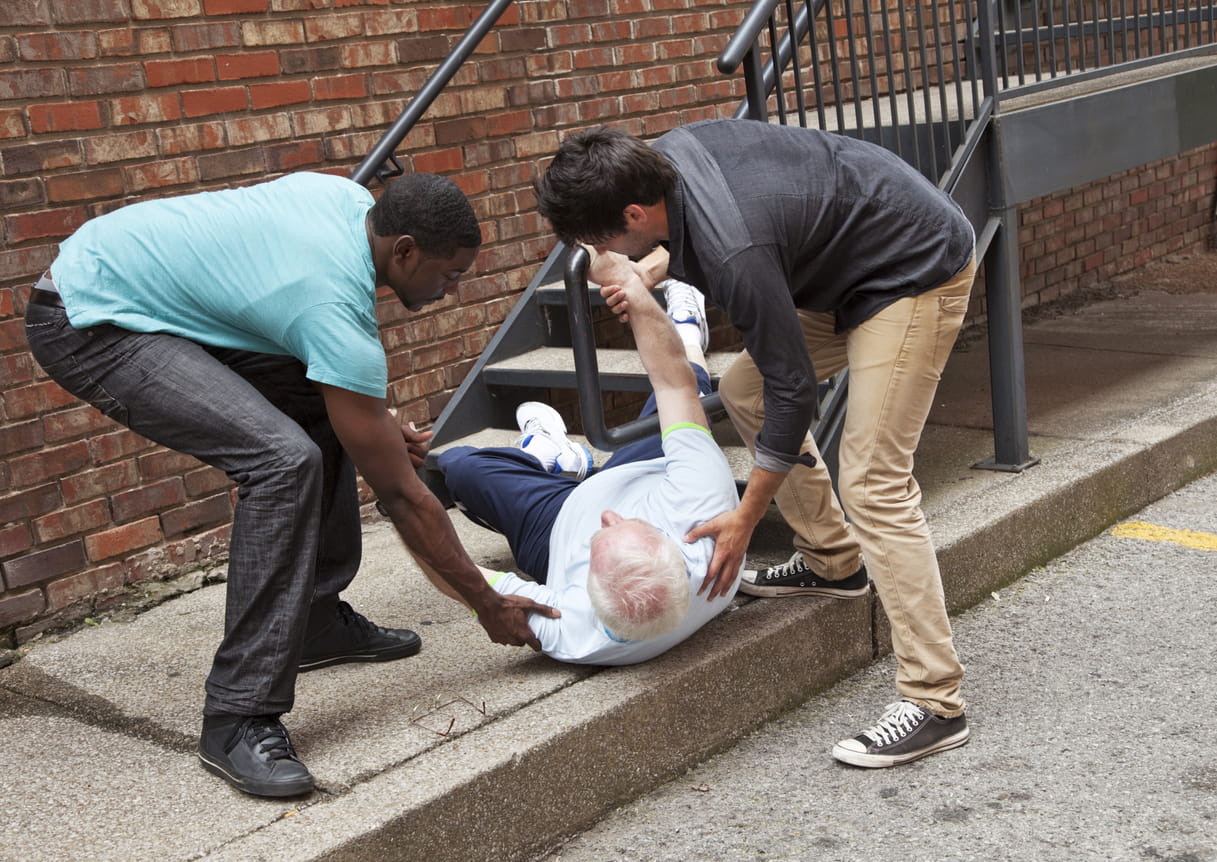
Do you have concerns about falling? Many older adults express concerns about falling and restricting their activities. We offer a variety of fall preventions programs and classes, including:
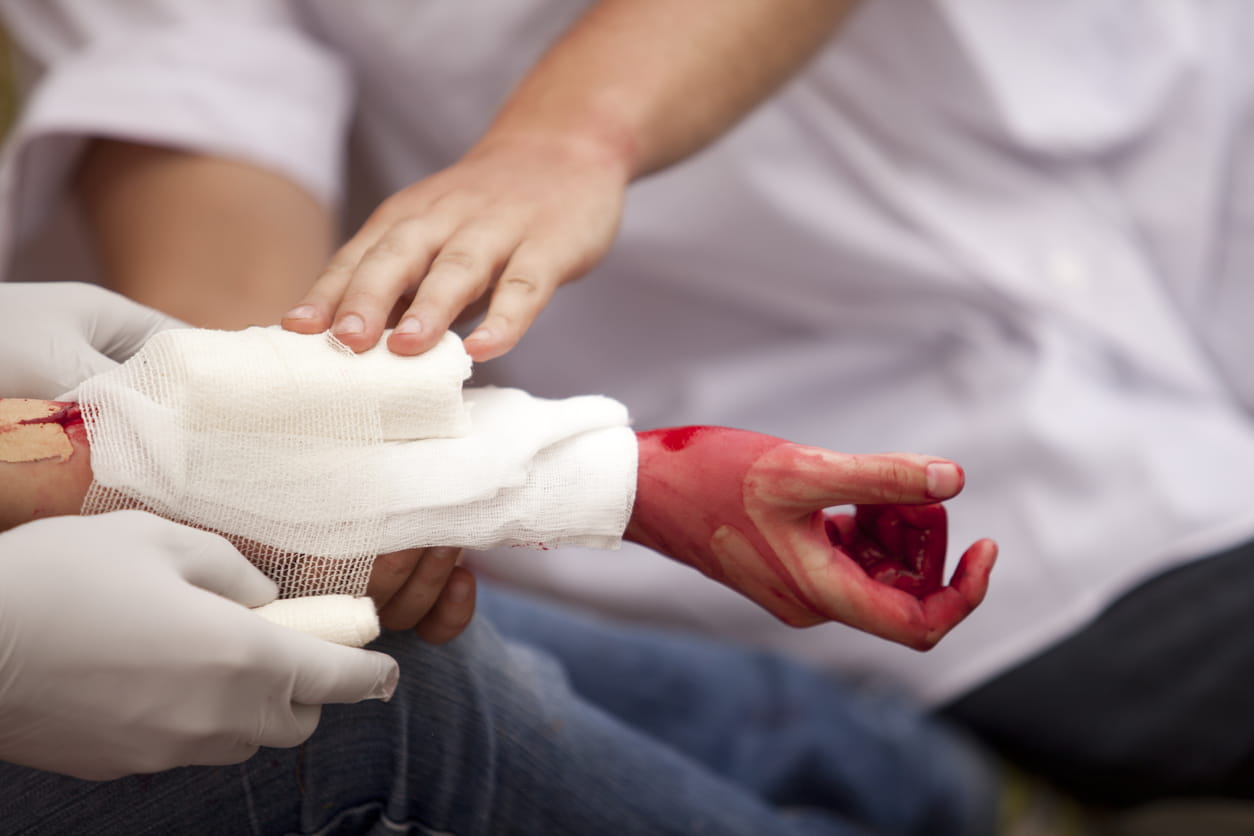
Severe bleeding injuries left unattended can result in death. When people learn the skills to stop uncontrolled bleeding during an emergency situation, lives can be saved. Main Line Health offers in-person training and online interactive STOP THE BLEED® courses.
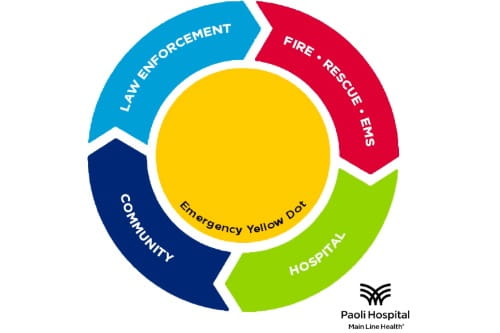
The Yellow Dot Program provides information for first responders so they can act as quickly as possible in the event of an emergency situation. By signing up, keeping your Yellow Dot care information in your glove compartment and showing your Yellow Dot sticker on your vehicle, you’re helping emergency medical staff get you the care you need as fast as they can.
Pelvic ring fractures can result in significant medical complications. Internal bleeding is the leading cause of death in patients with pelvic ring injuries, especially in those individuals involved in a motor vehicle collision.
The Main Line Health Annual Trauma Symposium will feature presentations on the latest advances and topics in trauma, while emphasizing the importance of quality patient care.
For 24-hour physician-to-physician consultation with a trauma surgeon or for transfer of an injured patient, call the Main Line Health Transfer Center at 1.855.MLH.STAT.
Trauma centers are located in a hospital’s emergency department (ED) so you’re deciding between going to an ED or urgent care. Urgent care is for when you need prompt medical attention for something that is not life-threatening.
Call 911 so emergency professionals can take you directly to an ED or trauma center if you have a high risk of internal bleeding or have life-threatening symptoms in your:
No, you don't need to call ahead. Either call 911 for direct transport by EMS or come directly to the emergency department at Lankenau Medical Center or Paoli Hospital and let us evaluate you. The majority of our patients are seen quickly.
Our trauma centers care for patients 16 years and older. We can stabilize patients younger than 16 and transfer them to an appropriate pediatric center.
In Pennsylvania, there are four levels of trauma centers. Level II trauma centers provide the same comprehensive specialty care and resources as Level I centers, but do not require a surgical residency program or trauma research. Level II centers also include neurosurgical care, which Level III and IV centers lack. Both of Main Line Health's trauma centers are Level II.
The trauma centers at Lankenau Medical Center and Paoli Hospital are both Pennsylvania Trauma Systems Foundation (PTSF) state-accredited Level II trauma centers. Both are located in the Philadelphia suburbs for convenient access for anyone who lives in Chester County, Delaware County, Montgomery County and Philadelphia County.
Our trauma centers are both Level II and offer the same high quality and advanced services. The only difference is that Lankenau Medical Center has an orthopaedic traumatologist who specializes in complex pelvic injuries.
Trauma surgeons from Thomas Jefferson University Hospital provide trauma care at Paoli Hospital and Lankenau Medical Center. These surgeons are dual board certified in surgical critical care and general surgery.
Main Line Health provides educational information and events about trauma care for our employees and other healthcare professionals.
The Main Line Health Trauma Symposium features presentations on the latest advances and topics in trauma, while emphasizing the importance of quality patient care
We provide EMS education on important topics, such as controlling internal bleeding through pelvic stabilization.
We encourage families or caregivers and healthcare professionals to reach out if you have any questions about our trauma centers: